Plate 08 Guide
Giclee vs regular print: what is the difference?
Giclee is a marketing word for a type of high quality inkjet print. Knowing what it usually means helps you compare quotes and avoid paying for a name.
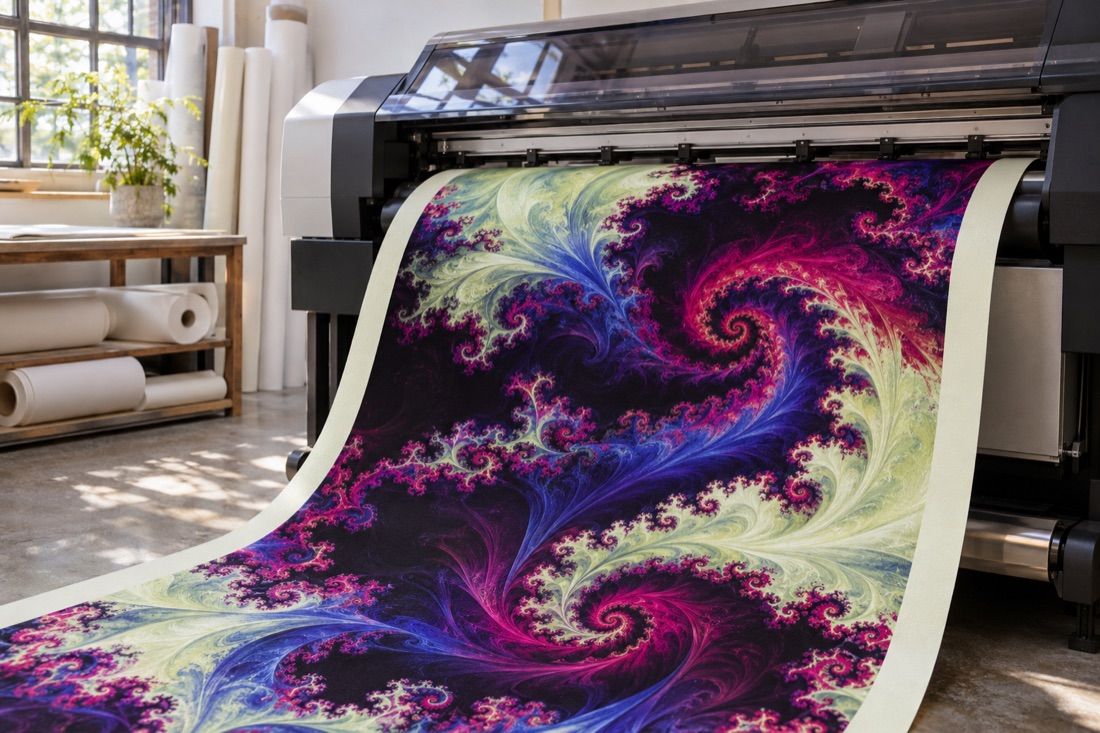
What giclee means
The word giclee comes from the French verb gicler, to squirt or spray. It was coined in 1991 by a printmaker working with early large format inkjet printers, and it was meant to separate fine art inkjet printing from ordinary office printing. There is no legal or technical standard for it. In practice a giclee print is an inkjet print made with a wide format printer, usually with pigment based inks, on art paper or canvas. The usual pronunciation is zhee-KLAY.
Giclee, photo print and office inkjet
A photo print from a lab is typically made either by exposing photographic paper to light or with a dye based inkjet process, and it is made for snapshots and everyday photographs. An office inkjet print on plain paper is made for documents. A giclee print usually uses more ink colours, pigment inks and thicker, acid free papers, with colour managed to match your file. Quality and longevity vary between labs, so the word alone is not a guarantee. Ask which printer, inks and paper will be used.
Paper, canvas and inks
Common choices include smooth or textured cotton rag papers, photo papers with a glossy or satin surface, and stretched canvas with a protective coating. Pigment inks sit on the paper as tiny particles, which generally resist fading better than dyes. Matte papers show deep colour less strongly but have no glare. Glossy papers give brighter colour but reflect light. Ask for a small sample if you are unsure.
Why fractal art suits pigment prints
Fractal pictures often contain smooth gradients, fine filaments and saturated colour, which are difficult for cheap printing. A wide gamut printer can reproduce the glow, and a quality paper can hold the detail of fine lines. Gradients also show banding if the file is too small or heavily compressed, so keep the master file lossless as described in how to make fractal art.
Preparing a file for a print lab
- Ask for the pixel size and colour profile the lab wants. Many ask for sRGB or Adobe RGB.
- Use the exact paper profile if the lab provides it, and soft proof on screen.
- Check for banding in gradients at full size and fix before ordering.
- Order a small test print before a large run. Screens glow, paper does not, and a test shows how bright colours will look.
What affects the price
Price depends on size, paper or canvas, the lab, the number of copies, proofing, framing and shipping. Ask for a written quote that lists each item. A very low price for a giclee may mean basic inks or paper, and a very high price may reflect a signed limited edition rather than better printing.
Are giclee prints worth it
They are worth it when colour accuracy and longevity matter to you, for example for work you plan to display for years or sell. For a quick proof or a casual poster, a photo print can be enough. Once you have a print, how to care for giclee prints explains how to keep it looking good.